When the World Cup draw concluded on a December afternoon in Washington, revealing with great fanfare the groups and match venues for the soccer spectacle taking place across North America this summer, teams and their traveling supporters learned where they would be headed.
For the German federation, the news fast-tracked planning for games in Houston, Toronto and Greater New York.
It also set the stage for another trip to a decidedly quieter destination: Winston-Salem, North Carolina.
While World Cup matches will take place in 16 big cities in the United States, Mexico and Canada, teams will spend most of their time at base camps sprinkled around the continent — some in uncommon places, such as prep schools, college campuses and small cities with otherwise no ties to the five-week, 48-nation tournament.
FIFA is not planning to verify camp selections until the week of Feb. 9, but some teams have already announced their picks and many others reportedly have finalized plans.
Brazil said it has chosen Red Bull New York’s Major League Soccer training center under construction in northern New Jersey. Croatia will practice at a boarding school near Washington. Spain is planning to set up in Chattanooga, Tennessee, while Norway chose Greensboro, North Carolina.
France is going to Boston and Portugal to Miami. Belgium seems set on Seattle, and South Korea announced Guadalajara, Mexico. Four teams, including England and reigning champion Argentina, want the Kansas City area, the Kansas City Star reported.
The U.S. team — which will play two of its three Group D matches in Greater Los Angeles — is expected to train full time in Southern California.
The scramble for long-term stays, interrupted by short-term visits to match locations, began last year as teams began qualifying for the World Cup. FIFA assembled a brochure of 64 options that included pro facilities in metro areas as well as off-beat places such as Boise, Idaho; Myrtle Beach, South Carolina; Stillwater, Oklahoma; and Spokane, Washington.
Federations also had the option of going off the board, though selections were subject to FIFA approval. FIFA’s list offered ample and disparate candidates, but because priority was given to teams based on rank and proximity to game venues, federations ran the risk of missing out on their top choices.
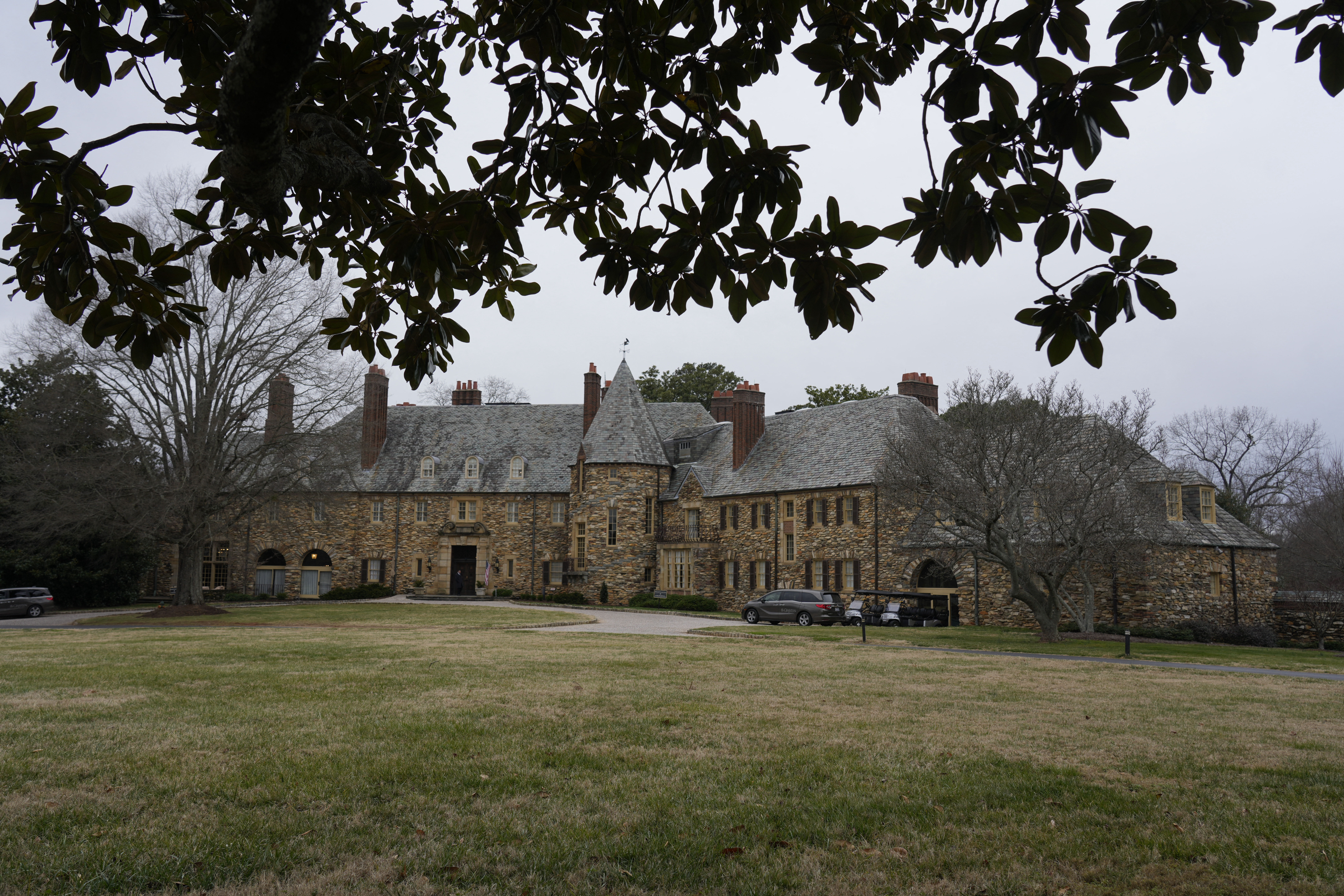
Such was the case with Germany, which bypassed the FIFA menu and chose to train at Wake Forest University and stay at the nearby Graylyn Estate, a boutique hotel on the National Register of Historic Places.
“We are creating the best possible conditions for a successful tournament,” said Andreas Rettig, managing director of sport for the German federation (DFB). “The environment is ideal, both in sporting and infrastructural terms.”
Some federations prefer a camp near a match venue. Others leaned toward the U.S. Midwest — equidistant to the coasts, where most games will take place. Some wanted urban settings, others remote locations to avoid distractions.
On Jan. 9, Germany became the first to go public, speaking highly of Winston-Salem’s welcome, Wake Forest’s facilities and the Graylyn’s high-end accommodations.
Recently, though, Yahoo Sports also learned what specifically went into the German decision.
Markus Löw, the national team’s head of management, and his team made several transatlantic trips to more than 40 potential base camps in the United States and Mexico. At home, DFB travel experts closely examined FIFA’s brochure online to rule out candidates.
Coach Julian Nagelsmann’s top priority was a short distance between the team hotel and training grounds. In other words, he didn’t want his team sitting on a bus 30 to 60 minutes each way almost every day of what could become six weeks away from home. The distance from the Graylyn Estate to Spry Stadium and adjacent fields is 1.9 miles.
Nagelsmann’s second priority was hotel exclusivity — a small facility occupied by the German delegation only. Looking like it had been plucked from 19th-century Europe, the 94-year-old Graylyn sits on 55 acres and offers 85 rooms inside its stone exterior.
The coach’s next consideration was the distance to game venues. Germany’s charter flights from North Carolina to group-stage matches are no more than a few hours. By finishing first in Group E — a clear expectation in a quartet with Ecuador, Ivory Coast and Curacao — the pathway to the final in East Rutherford, New Jersey, would require trips to Foxborough, Massachusetts, for the Round of 32; Philadelphia for the Round of 16; Foxborough for the quarterfinal; and Arlington, Texas, for the semifinal.
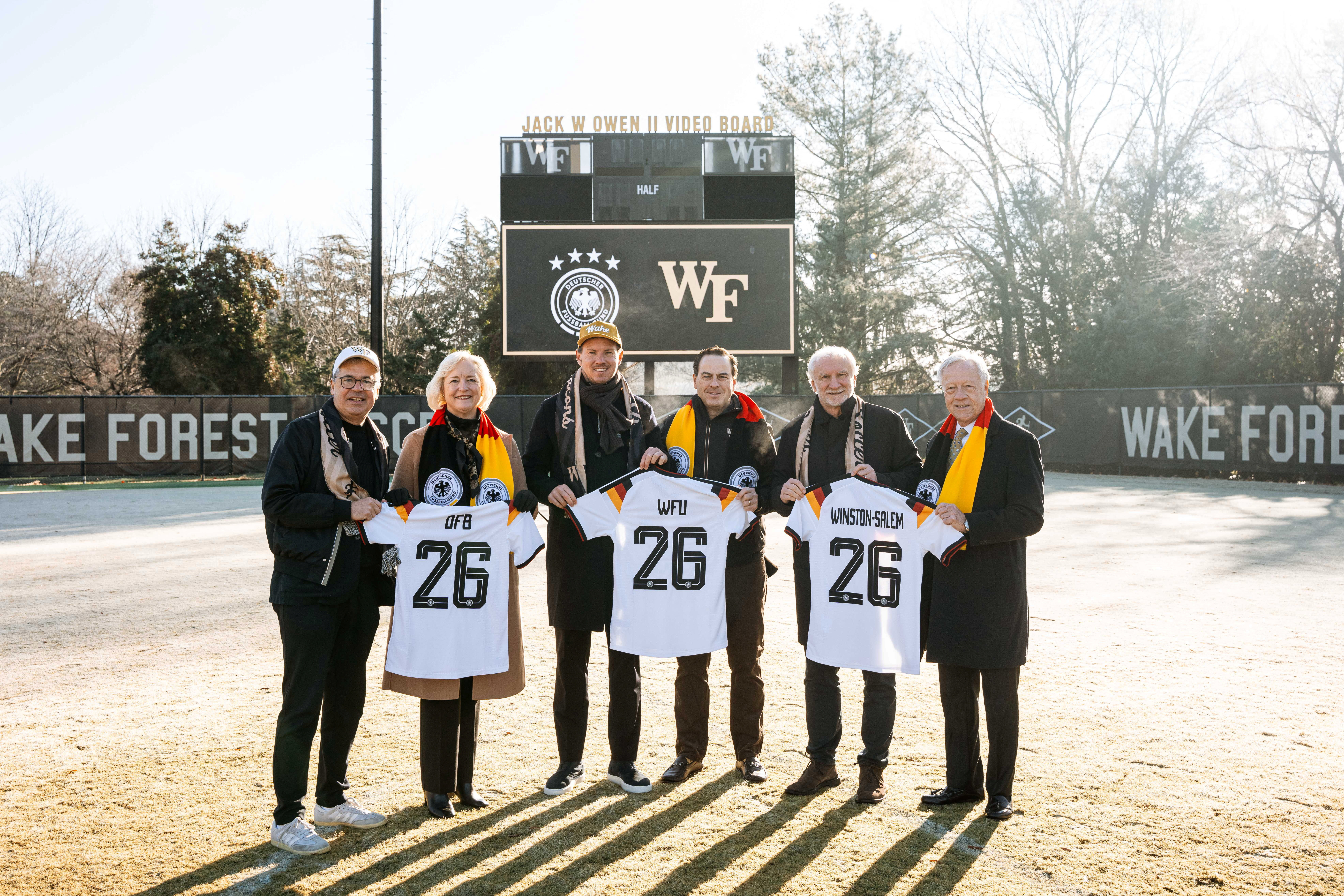
Unfamiliar with Winston-Salem and Wake Forest until the process accelerated, Löw visited Winston-Salem twice before accompanying Nagelsmann for a final tour in October.
Germany’s longstanding plans to stay there came with some uncertainty. Had the World Cup draw placed it in a group with matches in the Midwest or West, the Germans would’ve considered switching to their second choice: Austin, Texas.
With the favorable draw, they finalized their Winston-Salem plans. Löw is scheduled to return soon with Adidas representatives to begin detailed planning. In April, the DFB will begin shipping some of the 14 tons of equipment. While most of Wake Forest’s offerings met the DFB’s needs, the German staff plans to assemble a tented fitness center adjacent to the field, with equipment both shipped in and rented locally.
Due to arrive June 8 — two days after a friendly against the United States in Chicago — the full delegation will include four chefs, who will prepare meals with food mostly sourced locally. Special player requests and sponsored goods will arrive from Germany.
In weighing camp options, the DFB learned from past World Cups. At the 2018 tournament in Russia, the hotel situation was difficult and lacked the charm necessary for the team to settle in quickly. Four years ago in Qatar, the team was happy with the seaside hotel and training center but both were located an hour north of Greater Doha, where all game venues were located; only Belgium was based further away from the center of activity.
In 2014, when Germany won the championship in Brazil, the delegation occupied a remote seaside resort far from match venues.
“The team behind the team at the DFB has, with great precision and passion, identified the perfect base camp through an extensive process across the three host nations,” Rettig said. “Thanks to the draw, we were able to implement our preferred scenario.”
Common sense told Portugal to base itself in Houston, where it will play its first two group matches. But because those will be played indoors, coach Roberto Martinez saw no reason to train there. Instead, his team will set up in the Miami area, the site of the third match.
Croatia — a semifinalist at each of the previous two World Cups — opted for the Washington area, which, because of an inadequate stadium, wasn’t chosen as a match venue. Croatia’s group games are in Arlington, Texas; Toronto; and Philadelphia. The team will train at Episcopal, a private high school in Alexandria, Virginia, and stay in historic Old Town Alexandria, blocks from the Potomac River.
The Croatian delegation visited eight potential camps in the United States and Canada before submitting to FIFA its top five, led by Alexandria. Episcopal was a training venue during the FIFA Club World Cup last summer and has hosted other visiting teams over the years.
“There are many factors that make a good base camp and that we took into account – from the conditions at the training center, the quality of the hotel, geographic location, distance from the airport, privacy and surrounding,” coach Zlatko Dalić said. “In all aspects, Alexandria offers the best combination of these factors.”
Typically, visiting teams on location for weeks bond closely with their hosts. So when they’re eliminated early, there is mutual disappointment. Conversely, a deep run in the tournament brings shared joy.
“Of course, the overall impression of a camp is ultimately shaped by results,” Dalic said, “so I hope Alexandria will remain in our memories.”